Clovis Kids Birthday Parties: Memorable Moments That Last
If you have ever tried to plan a kids birthday party, you already know the truth. The cake matters, the theme matters, the activities matter, but the real win is something harder to measure: a room full of kids who are safely engaged, laughing for a long enough stretch that the parents can breathe again.
In Clovis, where families tend to be social and schedules can get busy fast, kids birthday parties often come down to details that feel small until the day arrives. The right start time. The right mix of structured play and free roaming. The right plan for the “what if” moments. When you nail those, the party stops feeling like a project and starts feeling like an afternoon people talk about for days.
I’ve helped families plan parties that ran smooth and parties that… didn’t. The difference was rarely the budget. It was usually pacing, crowd control, and choosing activities that match the kids you’ll actually have in the room.
The “memorable” part is really the pacing
Kids remember moments, not schedules. Still, the schedule is what creates the moments.
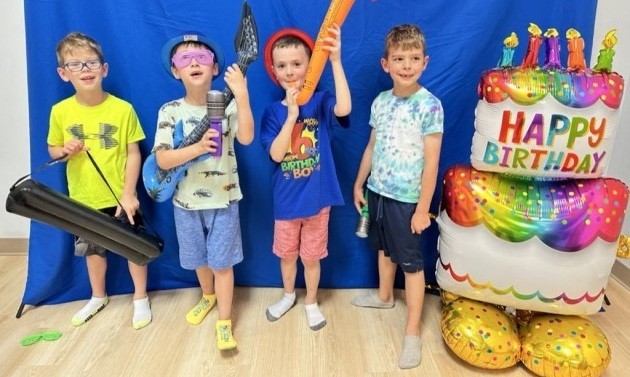
Think about how a typical party energy curve works. The first arrivals are always a little tense, even for outgoing kids. They are checking who they know, testing the vibe, and scanning for what is about to happen. If the first hour is too slow, they start filling the gap with chaos. If it is too intense, they burn out before cake time.
A smart party flow looks like this in practice: a warm welcome, a quick activity that gets everyone moving or interacting, a middle stretch where the loudest energy gets a safe outlet, and then a calmer landing for snacks, cake, or a group moment.
For Clovis parents, one of the biggest pacing helpers is being honest about how long kids can stay locked into one activity. Even when the activity is great, attention shifts. If you plan for attention to shift, you avoid the “we’re behind schedule” spiral. You also avoid the awkward moment where half the kids are restless while you’re trying to guide the group.
A quick example from the real world
A couple of years ago, I watched a party get derailed by timing, not by the plan itself. The family had booked a bounce house, which was clearly the highlight. But they treated it like a centerpiece and kept the kids on it for so long that the novelty wore off. Kids started taking turns too slowly, others began wandering, and parents ended up playing referee more than expected.
The bounce house was still fun, but the party’s rhythm collapsed. If they had done shorter bounce sessions with an easy “switch activity” in between, the whole afternoon would have felt smoother. That is the pattern I keep seeing. Memorable is often just good pacing.
Choosing a theme that holds up in a room full of kids
A theme is fun, but it also has a job. It should guide decisions: what you buy, how you decorate, what kind of game you run, and how you bring kids together.
The simplest themes are often the best because they can flex. “Superheroes” works across ages, and it supports multiple activity types. “Arts and crafts” naturally fits stations. “Sports day” gives you built-in movement without forcing elaborate props.
Where themes can fall short is when they become too detailed for the time you have. If you spend your energy making one highly specific prop that only one kid can use well, you might end up with frustration instead of fun.
In my experience, the sweet spot for kids birthday parties in Clovis is a theme that you can turn into a few easy stations or group games. That way, the kids do not spend the party waiting for their turn while the adults manage a bottleneck.
Theme trade-off to consider
If you have a mixed group of kids, themes that rely on advanced skill can be tricky. A craft theme can work beautifully, but only if the craft is designed for the age range. If you go older on the instructions without realizing it, you’ll get stalled tables, rushed finishes, and disappointment.
When in doubt, choose a theme that allows both guided fun and independent play. Independence matters more than most people think, especially when you have parents lingering nearby.
The venue question: at home, a park, or a local activity spot
The venue is one of the biggest “hidden determinants” of how the day will feel. It affects sound levels, cleanup, what parents can see, and how easy it is to handle last-minute changes.
At home: the comfort option with the highest responsibility
At-home parties feel personal, and kids relax faster because they are in familiar surroundings. The trade-off is that you own the flow completely. You need a plan for where kids will be, how snacks will be managed, and what happens if weather or energy spikes.
If you’re hosting at home, it helps to think like a traffic controller. You want one clear direction for arrivals, one space for food, and one space for the main activity. Kids move more predictably when adults have set boundaries that are easy to understand.
Parks and outdoor spaces: great energy, careful timing
Parks can be a dream in Clovis, but they demand attention to timing and supervision. Outdoor parties also make it easier for kids to burn energy quickly, which can be a positive if your cake timing is aligned.
If you choose outdoor, build a “calm inside option” if possible. Even if you do not physically move indoors, you should have something ready for the group when the heat, wind, or general restlessness rises.
Activity venues: structured fun with a cost
Bounce houses, indoor play centers, and local activity spaces can be fantastic because the environment is already set up for kids to play safely. The trade-off is that you may have less control over pacing, and you can feel more rushed if the venue has a strict time window.
If you go this route, pick an activity that supports your group’s age. A venue that is perfect for five-year-olds can feel overwhelming for older kids if they want more challenge. Conversely, an activity designed for older kids can bore the younger crowd fast.
The guest list math that prevents chaos
One of the hardest parts of planning Clovis kids birthday parties is dealing with the guest list reality. Parents will ask to invite “one more,” and kids will show up with friends you didn’t anticipate. That does not mean you’re doing anything wrong. It means you are dealing with human life, not spreadsheets.
You can’t control who comes, but you can control how your party handles more kids than you expected.
The key is to plan for the “middle scenario,” not the ideal scenario. Middle scenario means you assume you’ll end up somewhere close to your estimate, but not perfectly. Then you build activities that can scale slightly up or down.
A simple planning instinct I trust
If an activity requires one-on-one attention from an adult, assume you can only support a limited number of kids at a time. If you’re hosting at home, aim for activity formats that allow parallel play. Stations are not just a fancy idea, they are a lifesaver.
When the group can split naturally, you reduce waiting, you reduce “bored energy,” and you reduce the number of times you have to redirect kids at once.
Food and cake: where the party either glides or trips
Food is where parents start thinking about logistics instead of fun, and that is understandable. Kids can be picky, allergies are real, and you also want enough that everyone feels included.
You do not need a banquet. You do need two things: clear snack timing and easy-to-handle foods.
In most parties I’ve seen go well, the food schedule is simple. Snacks arrive before cake, so kids are not exploding from hunger. Cake is served in a way that keeps things moving. Then you follow with something filling enough to carry the afternoon.
A big mistake is serving cake and immediately asking kids to switch to a complicated activity. Some kids need the “post-cake settle” moment. If you already planned a transition, the party feels smooth even if the group is still buzzing.
Allergy reality, handled calmly
I’ve learned that the best approach is straightforward and calm. Confirm allergies with parents ahead of time, then keep your plan simple. Labeling helps. Keeping an allergen-safe option available helps even more.
Try not to make food into a stress test. Kids pick up tension quickly. If you handle allergy concerns with clear steps, most families feel supported.
Timing that feels effortless
When people say they want a party that feels effortless, they’re really describing a timeline that doesn’t force you into frantic decision-making.
You can make a good timeline even if you do not know the exact minute everyone arrives. The goal is to anchor key moments, like when kids start activities and when cake happens.
Here’s a pacing template I’ve seen work well for many families. Adjust based on your ages and your venue time limit.
- Arrivals and quick mingling: about 20 to 30 minutes
- Main activity or games: 45 to 60 minutes
- Snacks and drinks: 20 minutes
- Cake and candles: 15 to 20 minutes
- Free play or wrap-up: 20 to 30 minutes
This is not strict. It is a pressure-release valve. When the group runs late, you still have a plan. When kids slow down, you can stretch without chaos.
Decorations that don’t steal your attention
Decorations are the fun part until you realize they took your whole morning. The smartest decoration strategy is to keep it “high impact, low effort.”
Think about what kids notice immediately. Bright colors. Familiar symbols. A photo moment with a simple backdrop. Banners and balloons can be great, but they do not have to be complicated.
For Clovis families, I often suggest a “one focal point” approach. Choose one area that becomes the party hub. That could be the dessert table, the main game space, or a backdrop for photos. When the party has a clear center, kids do not wander aimlessly, and parents can find what they need faster.
One more thing: if decorations are fragile or require constant adjustments, skip them. I’ve seen parties lose momentum because adults were constantly fixing a bow, a banner, or a leaning sign. A stable setup keeps the vibe light.
Games that actually fit the age group
Activities are where a party becomes a real celebration instead of just hanging out. But you do not want games that are either too complicated or too passive.
For younger kids, short games with clear rules work best. For older kids, you can add challenge or team competition, but you still want breaks for water and regrouping.
Two activity styles that travel well
If you’re choosing between types of games, consider whether the game creates movement, and whether it supports group participation.
A lot of parties succeed with a mix of these: a structured game that starts everyone together, followed by a “station” game where kids rotate or choose. Rotations reduce friction. They also give kids a sense of variety without requiring constant adult prompting.

If you want one simple rule of thumb, here it is: plan at least one activity that does not depend on every child behaving perfectly. That is how you recover when the energy shifts.
The parent experience matters more than people admit
Kids birthday parties are for kids, but parents are part of the room. Even if you do not ask for extra help, parents provide emotional context. If parents feel comfortable, they relax. When they relax, the kids mirror that.
I’ve seen the biggest difference in parties come from adult communication. When the host explains how the food works, where kids can play, and what the cake timing is, parents stop hovering and start enjoying themselves.
It also helps to be clear about boundaries. For example, if kids are playing in one area only, let parents know. If you’re serving food at a specific time, mention it. Small clarity prevents a lot of confusion.
What to pack and prep (without turning it into a second job)
Even if you are organized, birthday parties create last-minute needs. You might discover you’re missing tape, extra napkins, or that one essential item that makes everything easier.
Here’s a compact packing prep list that I recommend to families, especially for at-home Clovis kids birthday parties.
- Extra cups, napkins, and trash bags
- Hand wipes and a small first-aid kit
- Tape and scissors (for quick fixes and crafts)
- Water bottles or drinks for kids
- A small box of backup snacks (for pickiness and timing)
This list feels basic, but it prevents the most common kind of party stress: the “we ran out” problem and the “no one brought that” moment.
Gifts: keep them thoughtful, not overwhelming
Gifts are often a major expectation, but the trick is managing the emotional weight. If kids get too many gifts at once, they can become overstimulated. If you have a lot of kids in the room, gift opening can also stretch the party longer than planned.
Many families find a middle path. You can limit the number of kids who open gifts at one time, or you can keep gift opening brief. For some kids, skipping gift opening entirely and focusing on cake and games feels best. For others, opening gifts is the highlight.
If you’re unsure, watch the birthday kid. Their personality usually points to the right approach. The party should feel like their day, not a performance for adults.
Handling the “what ifs” without making it weird
Every party has moments that test the plan. One kid arrives late. Another kid has a meltdown. Someone’s parent asks a question at the worst time. A game needs adjustment because half the group is less enthusiastic than expected.
The way to handle this is not to improvise wildly. It’s to have a few flexible options.
For example, if a game stops working, pivot to something that still keeps kids engaged. A quick round of a simpler game, a team-based relay, or even a short group photo can reset attention. If it’s a venue setting, follow the space’s rules but choose an activity that does not require intense coordination.
If the meltdown happens, treat it as normal. Kids have big feelings, and parties can Birthday Parties Clovis We Rock The Spectrum - Clovis intensify those feelings. The best host response is calm, brief, and practical. Get the child what they need, then bring them back into the group when they’re ready, even if it’s later than planned.
Making photo moments that don’t feel forced
Photos are part of why parties matter long after the day. But kids do not always cooperate on command, so it helps to build photo moments into the party flow naturally.
You can create a photo area that is ready when the group is already gathered, like near the dessert table or theme backdrop. Then encourage photos during a transition, not when you’re asking kids to stop playing abruptly.
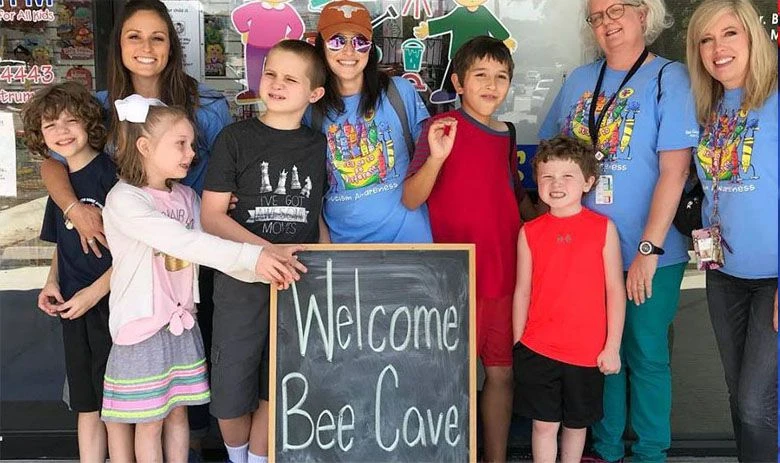
The dessert table area is often a win because kids are already moving in that direction. A simple banner and a stable backdrop can make the photos look like the party had its own identity, even if you kept the decorations minimal.
A final perspective: the best parties are the ones you don’t dread
Some birthday parties feel like an event. Others feel like an afternoon that happens to include cake. When you plan the party with pacing, guest list reality, and kid-friendly activities in mind, you create the second kind.
That is what makes Clovis kids birthday parties last in memory. Not because everything was perfect. Because the day felt safe, lively, and genuinely fun. Kids stayed engaged long enough to laugh with each other, and adults had enough structure to enjoy the moment instead of scrambling for it.
If you’re planning one soon, pick the pieces that will create momentum, not stress. Build a simple timeline. Choose a theme that can flex. Prepare the basics so you’re not searching mid-party. When those foundations are in place, the memories come naturally.
We Rock The Spectrum - Clovis
80 W Bullard Ave Ste 110, Clovis, CA 93612, United States
Phone number: 559-999-8341